
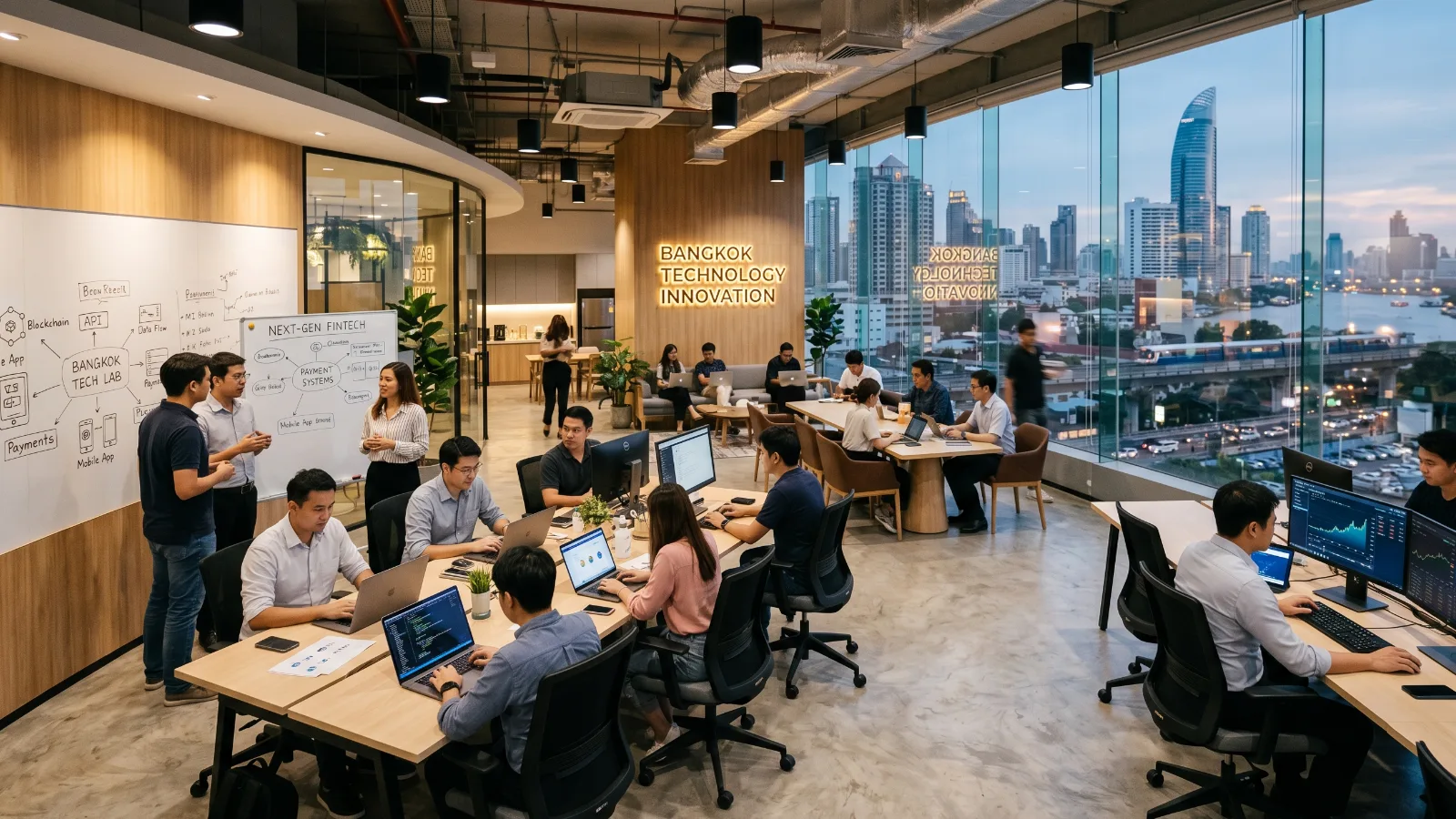
The Southeast Asia market is undergoing a profound economic structural repricing. Driven by massive macro shifts, accelerating digital transformation, and a historic 62.6% growth rate in key regional innovation ecosystems, the ASEAN business growth narrative has evolved. Southeast Asia is no longer just a destination for low-cost manufacturing or baseline consumer outsourcing; it has transformed into a highly competitive sandbox for advanced technologies, deep fintech integration, and premium commercial ventures.
According to the latest Global Startup Ecosystem Index, Thailand has officially broken into the world’s Top 50 startup ecosystems for the first time in six years, anchoring itself as ASEAN’s dominant medical technology (MedTech) hub.Concurrently, regional urban centers like Bangkok, Chiang Mai, and Phuket have become powerful magnet cities.Bangkok now ranks as the number one city in ASEAN for robotics startups, while secondary engines like Chiang Mai and Phuket are posting explosive annual ecosystem growth rates exceeding 85%.
For ambitious Thai entrepreneurs, regional corporate leaders, and international investors, navigating this fragmented yet lucrative landscape requires a sophisticated framework. Identifying alpha-generating business opportunities across the Southeast Asia market demands an acute understanding of how localized AI tools, cloud software infrastructure, sophisticated wealth management strategies, and enterprise-grade software automation converge to solve high-value friction points.
1. Map Macro Trends: Decoupling Volume from High-Value Economics
To uncover the most profitable business opportunities in Southeast Asia, one must look where enterprise capital is flowing. Across the region, industries are prioritizing average selling price (ASP) expansion, margin protection, and high-income consumer segments over raw transactional volume. This represents a structural maturity shift across multiple major verticals.
The Rise of Agentic AI and Hyper-Automation

The region has officially moved past raw experimentation with large language models. Enterprise buyer demand is now heavily focused on Agentic AI—autonomous systems capable of handling complex cross-platform business workflows without constant human intervention. High-growth firms are integrating enterprise software with bespoke AI automation pipelines to mitigate mounting labor compliance complexities and skills shortages.
High-Income Consumer Clusters
While traditional, entry-level consumer segments face affordability pressures due to global supply chain adjustments, the premium and luxury lifestyle sectors are booming. Tourism hubs like Phuket are pivoting sharply toward ultra-luxury wellness economies, medical tourism, and high-net-worth digital nomad ecosystems.
FinTech and Cross-Border Interoperability
Thanks to unified payment initiatives across ASEAN, cross-border digital banking and real-time multi-currency settlement are frictionless. This infrastructure provides an open runway for B2B e-commerce platforms, alternative credit card solutions, and customized insurance coverage portals designed for cross-border logistics.
2. Evaluate Core Business Pillars Across ASEAN
Succeeding as a B2B SaaS platform, digital agency, or enterprise service provider in Southeast Asia requires deploying the correct operational tools. The table below analyzes the foundational tech verticals and premium software platforms necessary to capitalize on commercial-intent business opportunities across the region.
| Technology Vertical | Premium Solution / Top Software | Strategic Business Application | High-Value Monetization Focus |
| Enterprise Financial Infrastructure | Opn Payments (Omise) / Stripe | Seamless integration of local promptpay, digital wallets, and credit card solutions. | Essential for fueling Thai ecommerce growth and managing cross-border ASEAN settlement. |
| Agentic Workflow Automation | Make.com / Zapier Enterprise / Salesforce Flow | Creating autonomous business automation layers between legacy databases and customer touchpoints. | Drastically reduces manual operational costs for asset-heavy Bangkok businesses. |
| Data-Driven CRM Systems | HubSpot CRM / Salesforce Sales Cloud | Managing complex, high-touch client pipelines with automated lead scoring and compliance tracking. | Highly sought after by premium real estate, insurance coverage, and wealth management firms. |
| Localized AI Translation & Tuning | OpenAI Enterprise / Anthropic API Custom Layer | Building localized, culturally nuanced LLM interfaces tailored for regional dialects. | Solves the critical multi-language localization bottleneck hindering regional business expansion. |
| Enterprise Cloud Solutions | AWS / Google Cloud Platform (GCP) | Hosting localized SaaS platforms with secure, decentralized, and compliance-ready data nodes. | Meets stringent regional regulatory mandates (e.g., Thailand’s PDPA) for data processing. |
3. High-Value Arbitrage Sectors in Southeast Asia
By analyzing the intersection of enterprise demand and technological gaps, entrepreneurs can locate several highly lucrative sectors ripe for disruption.
Advanced Robotics and Automation for Bangkok Businesses
With Bangkok climbing rapidly in global tech rankings and securing the top spot in ASEAN for robotics innovation, a substantial B2B opportunity exists in serving industrial, logistical, and retail corporations. Thai entrepreneurs who build business productivity systems that bridge the gap between physical hardware and cloud software are securing high-ticket corporate enterprise plans. This trend is heavily backstopped by corporate investments aimed at shielding supply chains from human talent scarcity.
MedTech, Wellness, and Luxury Lifestyle Ecosystems

Thailand’s top ranking in ASEAN for MedTech startups underlines an unprecedented structural shift: the rise of the specialized Wellness Economy. This expands far beyond traditional hospitality. The modern opportunity lies in creating high-end vertical SaaS platforms for medical concierge tracking, cross-border insurance coverage validation, and AI-driven personalized health analytics for international patients visiting luxury medical hubs in Bangkok and Phuket.
AI-Driven Localization for Regional Digital Marketing Platforms
The Southeast Asia market is uniquely fractured by language, culture, and localized platform usage (such as the dominance of the LINE app in Thailand compared to Super Apps in Indonesia). A massive bottleneck for global brands is executing hyper-localized content marketing. Building a specialized agency or micro-SaaS utilizing advanced AI tools to parse local consumer trends, run automatic sentiment analysis, and deploy optimized copy to regional ad networks can unlock premium, recurring brand retainers.
4. Execution Framework: The 5-Step Validation Funnel
To capitalize on these high-margin opportunities without exposing yourself to fatal capital drain, utilize this structured execution blueprint:
1. Identify a Regulatory or Structural Friction Point
   Focus on sectors with high commercial intent, such as fintech compliance, cross-border shipping, or real estate CRM alignment.

2. Build an Integration MVP Using Existing Top Software
   Avoid expensive ground-up coding. Chain existing cloud software, APIs, and business automation platforms to construct your solution.

3. Ensure Absolute Regional Compliance
   Validate that your system conforms perfectly with local data frameworks like Thailand's PDPA and central bank digital banking guidelines.

4. Target Inbound Organic Channels via Intent-Driven SEO
   Produce premium, authoritative thought-leadership content targeting high-CPC business services keywords to capture enterprise buyers.

5. Lock In Recurring Revenue with Scalable Corporate Plans
   Transition initial consulting or setup arrangements into high-eCPM enterprise plans or multi-year retainer contracts.
5. Benefits, Risks, and Future Strategic Outlook
Navigating the ASEAN market requires balancing its immense macroeconomic upside against distinct localized structural risks.
The Strategic Benefits
The primary benefit of executing business models in Southeast Asia is the sheer speed of digital adoption. Consumers and business operators are intrinsically mobile-first and eager to adopt modern AI automation if it gives them a competitive edge. Furthermore, establishing operations in competitive startup hubs like Chiang Mai allows founders to leverage low regional operating costs while billing international corporate clients in high-value currencies—creating an excellent wealth management engine.
The Critical Risks and Limitations
- Intense Regulatory Fragmentation: While ASEAN operates loosely as an economic bloc, data processing laws, business banking regulations, and corporate structures vary wildly between Thailand, Singapore, Indonesia, and Vietnam.Expert Commentary: A standard architecture that works perfectly for a digital marketing platform in Singapore might violate data privacy laws under Thailand’s PDPA if customer metrics are improperly routed across borders. Custom compliance layers are mandatory.
- Talent Gaps in DeepTech: While startup community activity across Thailand ranks second in the entire Asia-Pacific region, finding highly specialized engineering talent for custom AI architecture remains a constraint.Founder Solution: Successful startups are leaning heavily into no-code or low-code frameworks paired with advanced business productivity platforms, bypassing the need for massive, hyper-specialized development teams.
The Future Outlook
Looking toward the horizon, the separation between generic volume and high-value margin will continue to widen. The integration of autonomous personal AI agents into daily commerce will fundamentally reshape Thai ecommerce growth patterns. Winners in this space will not be those who build generic software, but those who build highly specialized middleware connecting foundational cloud infrastructure with the highly specific, nuanced real-world operations of Southeast Asian businesses.
Frequently Asked Questions
Why is Thailand suddenly surging as a premier ASEAN startup hub?
Thailand’s historic climb to 49th globally in the Global Startup Ecosystem Index is driven by strategic structural enhancements. The country has deliberately positioned itself as ASEAN’s leading MedTech startup incubator and Bangkok has emerged as a powerhouse for robotics innovation. Backed by explosive startup community activity and growing investor confidence, Thailand is rapidly transitioning from a lifestyle destination into a full-scale tech development base.
What is the most critical compliance step when launching a SaaS platform in Thailand?
Any entrepreneur launching a digital marketing platform, business banking application, or cloud software service targeting Thai users must build their system around the Personal Data Protection Act (PDPA). This requires explicit user data mapping, clear consent architecture, and verifying that all third-party AI tools or cloud hosting nodes utilize secure, enterprise-grade data isolation protocols.
How does the integration of Agentic AI benefit traditional Bangkok businesses?
Traditional businesses in legacy sectors like real estate, luxury lifestyle travel, and shipping suffer from severe administrative friction. Integrating Agentic AI allows these organizations to automate complex, multi-step customer inquiries, synchronize backend CRM software with communication channels like LINE, and process financial tools automatically. This results in massive cost reductions and eliminates human operational bottlenecks.
Which payment processing features are required for ecommerce growth in Southeast Asia?
To successfully capture regional traffic, businesses must offer highly localized checkout experiences. In Thailand, this means native integration with PromptPay QR settlement systems alongside conventional credit card solutions. For broader ASEAN expansion, financial tools must support localized digital wallets across Indonesia, Malaysia, and the Philippines, coupled with multi-currency business banking infrastructure.
Is deep technical coding mandatory to build an AI automation business in the region?
No. By capitalizing on top software stacks, visual workflow pipelines, and enterprise plans from major infrastructure providers, non-technical founders can architect highly sophisticated business automation services. The true barrier to entry is no longer coding capacity—it is having the deep, localized business insight required to spot an enterprise friction point and properly orchestrate tools to solve it.
Professional Financial & Business Disclaimer
The information contained within this publication is provided for general informational, educational, and journalistic purposes only and should not be construed as legal, financial, tax, or professional investment advice. Launching a commercial entity, implementing enterprise software infrastructure, or deploying capital within the Southeast Asia market carries inherent operational risks, market volatility, and platform dependencies. Regional economic metrics, regulatory frameworks (including Thailand’s Personal Data Protection Act – PDPA), and central banking digital policies are subject to rapid structural adjustments. Software pricing models, API accessibility, and provider terms of service can fluctuate based on geographic jurisdiction and provider updates. Readers are strongly advised to perform independent due diligence and consult with licensed corporate attorneys, certified tax advisors, and wealth management experts prior to executing business strategies or investing capital in the ASEAN region.